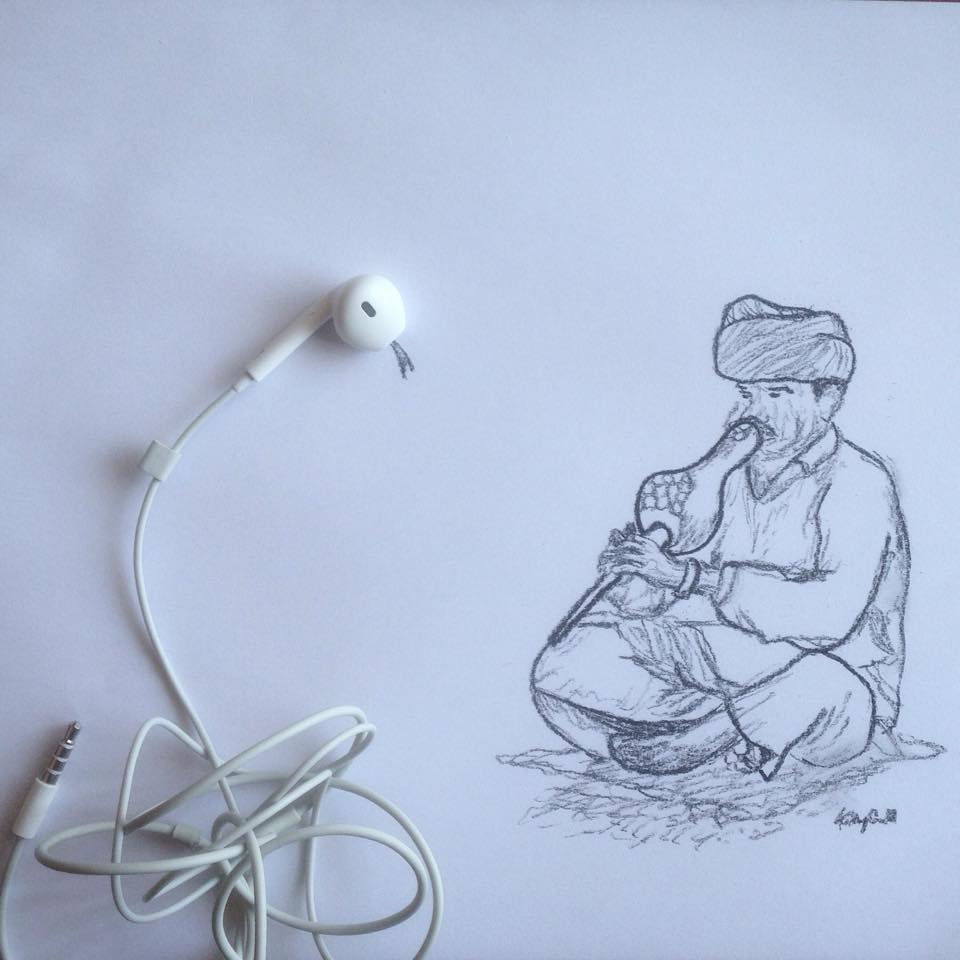
Pink Tones Live in Concert at Sala Sol

Smoke fills the stage. Lasers green as kryptonite scan the crowd. People are pulsing with this familiar beat. Alvaro Espinosa, lead singer and guitarist, pulls away from the microphone, and the entire room bursts into song, singing words we’ve remembered since our childhood: “We don’t need no education.” Alvaro rattles his guitar again, and we sing some more. “We don’t need no thought control.” Across the crowd, people raise their bottles of Heineken, singing at the top of their lungs—one loud, Spanish voice rocking out this box called Sala Sol. “Hey, teacher. Leave those kids alone.”

“Pink Floyd in Madrid?” you ask. Well, not quite. They call themselves the Pink Tones, a tribute to the epic British progressive rock band that’s marked music history since the 60’s. Despite the Pink Tones mismatched stage appearance, the message is clear: they’re not here to look pretty, they’re here to make music, and as far as the music goes, they’re just plain good.

I’ve been to five concerts by the Pink Tones. I didn’t grow up listening to Pink Floyd, but by this last concert at Sala Sol I was singing along with the best of this band’s nostalgic following, howling the lines I could remember from “Comfortably Numb,” “Wish You Were Here,” “Money,” and “Shine On You Crazy Diamond.”

I guess you could call me a groupie. There’s about ten of us who know Alvaro, the guy in front with the wild hair. We’ve been going to his concerts for a while now. First it was the Radiohead band. Then it was the fusion jazz band. Now it’s the Pink Tones. One thing is for sure: we’re not sure what sound we’re going to get next.

Even more eclectic are the Friday nights when we all end up at Alvaro’s apartment with two or three guitars, singing our lungs out. The evening turns into early morning, and somehow we’ve managed to medley The Beatle’s “Revolution,” Elvis Presley’s “Are You Lonesome Tonight?,” Lynyrd Skynyrd’s “Sweet Home Alabama,” Creedence Clearwater Revival’s “Cotton Fields” and a jukebox of other songs I don’t know, singing by request anything from American jazz to Spanish flamenco to Brazilian pop. Nothing’s off-limits.

We spend the night drifting between genres, languages and instruments, and at the end of the night when I’m sitting in the back of a taxi zipping across town to my place, I find myself thinking about the concert at Sala Sol and all those Spanish people singing Pink Floyd in English. “Remember when you were young, you shone like the sun,” they cry, swaying to the music, “Shine on you crazy diamond.” I wonder how many of them speak English. How many of them understand the words they’re singing? Either way, it’s obvious English doesn’t stop them from loving music. They sing the songs anyway.

It seems ironic now that my Spanish friends call me the international. I’m the one from beyond, the world traveler, the experienced one. Do they know I’m still trying to get the hang of these Pink Floyd songs?

I’ve been living internationally for two and a half years, but I get the feeling that my Spanish friends have been living internationally their whole lives. Most of them haven’t lived outside of Spain, but being with them is an international experience in itself. It’s the music, of course, and it’s thinking across borders. It’s conversations about Russian politics and Cuban mixed drinks and that movie in the theater from Afghanistan and travel plans to The Philippines. It’s thinking the whole world is fair game, within limits, ours for the taking.

Maybe it’s the proximity. Geographically speaking, Europe is tiny. It’s enough culture and language to fill a planet squished into one continent the size of Canada. Crossing borders is a way of life here.

Whatever it is I have to do to get my pair of border-crossing shoes, I’m listening. I want to learn how to cross borders too.

The taxi driver fiddles with the radio and finds his station, filling the cab with Spanish sounds. I stare from the window and listen to the radio—maybe I’ll be the one singing along this time.

Arts & Entertainment | May 2nd, 2005 | No Comments


Moroccan Mint Tea

Morrocan Mint Tea

I spent the weekend in Morocco. I took the bus from Madrid to Algeciras, then the ferry to Tangier. Ten hours and I was in Africa.

I’m sure it sounds belittling to say one of the highlights of the weekend was a cup of tea, but after my introduction to Morrocan Mint Tea the night I arrived, I took every opportunity afterwards to savor each steamy cup, a simple blend of spearmint leaves brewed in green tea and sweetened with sugar.

Three days after returning to Madrid, I’m still regretting the first 25 years of my life without Morrocan Mint Tea. But I’m making up for lost time. I’ve brewed my own kettle, poured a cup, and tasted it. It’s good. Very good.

The only thing left to do is to type up the recipe and share it. Here it is.


Prep. Time: 10 minutes
Servings: 4

Ingredients:
2 teaspoons green tea (té verde) or gunpowder tea
1/3 cup sugar
Fresh spearmint sprigs (hierbabuena)
3 cups boiling water

Preparation:
Boil 3 cups of water in a kettle

Meanwhile, put tea, sugar, and spearmint in a teapot.

Pour boiling water into teapot and allow tea to steep on the stove at medium heat for 3 to 4 minutes.

As you pour each glass, hold the teapot as high above the glass as you dare. It’s all part of the ceremony. Add a small sprig of spearmint to each glass if you like. Serve hot or warm.

Food | April 14th, 2005 | No Comments


Free Museums on Sundays in Madrid

Save your euros for another day. Sundays are free in Madrid. Here’s an alphabetical list of museums, monuments, and art exhibitions across the city, all free on Sundays.

To help make your plans for this Sunday a little easier, here’s a metro map, a street finder, and a Spanish / English dictionary. Enjoy!

Museums & Monuments

Museo Africano
Hours: 11:30 to 13.00
Address: Arturo Soria, 101
Metro: Arturo Soria

Museo de América
Hours: 10.00 to 15.00
Address: Avenida de los Reyes CatĂłlicos, 6
Metro: Moncloa

Museo ArqueolĂłgico Nacional
Hours: 9.30 to 14.30
Address: Serrano, 13
Metro: Serrano / ColĂłn

Museo Casa de la Moneda
Hours: 10.00 to 14.00
Address: Doctor Esquerdo, 36
Metro: O’Donnell / Goya

Museo Cerralbo
Hours: 10.00 to 15.00 (Summer Hours: 10.00 to 14.00)
Address: Ventura RodrĂ­guez, 17
Metro: Ventura Rodríguez / Plaza de España

Museo de la Ciudad
Hours: 10.00 to 14.00
Address: PrĂ­ncipe de Vergara, 140
Metro: Cruz del Rayo

Museo de Escultura al Aire Libre
Hours: N/A
Address: Paseo de la Castellana, 41
Metro: Rubén Darío

Museo Geominero
Hours: 9.00 to 14.00
Address: RĂ­os Rosas 23
Metro: RĂ­os Rosas / Alonso Cano

Museo Lázaro Galdiano
Hours: 10.00 to 14.00
Address: Serrano, 122
Metro: Rubén Darío / Gregorio Marañón

Museo del Libro
Hours: 10.00 to 14.00
Address: Paseo de Recoletos, 20
Metro: ColĂłn

Museo Municipal
Hours: 10.00 to 14.00
Address: Fuencarral, 78
Metro: Tribunal

Museo Nacional de AntropologĂ­a
Hours: 10.00 to 14.00
Address: Alfonso XII, 68
Metro: Atocha / Atocha-Renfe

Museo Nacional Centro de Arte Reina SofĂ­a
Hours: 10.00 to 14.30
Address: Santa Isabel, 52
Metro: Atocha

Museo Naval
Hours: 10.00 to 14.00 (guided visit at 11)
Address: Paseo del Prado, 5
Metro: Banco España

Museo del Prado
Hours: 9.00 to 19.00
Address: Paseo del Prado, s/n
Metro: Banco de España / Atocha

Museo de la Real Academia de Bellas Artes de San Fernando
Hours: 9.00 to 14.00
Address: Alcalá, 13
Metro: Sol / Sevilla

Museo de San Isidro
Hours: 10.00 to 14.00 (Closed Sundays in August)
Address: Plaza de San Andrés, 2
Metro: La Latina

Museo Sorolla
Hours: 10.00 to 14.00
Address: General MartĂ­nez Campos, 37
Metro: Iglesia / Rubén Darío

Museo Taurino
Hours: March to October 10.00 to 13.00
Address: Alcalá, 237
Metro: Ventas

Museo TelefĂłnica
Hours: 11.00 to 14.00
Address: Fuencarral, 1
Metro: Gran VĂ­a

Museo del Traje
Hours: 10.00 to 15.00
Address: Avenida de Juan de Herrera, 2
Metro: Moncloa / Ciudad Universitaria

Real Ermita de San Antonio de la Florida (PanteĂłn de Goya)
Hours: 10.00 to 14.00
Address: Paseo de la Florida, 5
Metro: Norte / PrĂ­ncipe PĂ­o

Templo de Debod
Hours: 10.00 to 14.00
Address: Paseo Pintor Rosales s/n
Metro: Ventura Rodriguez / Plaza de España

Art Exhibitions

Centro Cultural de Conde Duque (GalerĂ­a del 98)
Hours: 11.00 to 15.00
Address: Conde Duque, 9-11
Metro: Ventura Rodriguez / Noviciado

FundaciĂłn Caja Madrid
Hours: 10.00 to 20.00
Address: Plaza de San MartĂ­n, 1
Metro: Ópera / Sol

FundaciĂłn Juan March
Hours: 10.00 to 14.00
Address: CastellĂł, 77
Metro: Núñez de Balboa

La Casa Encendida
Hours: 10.00 to 10.00
Address: Ronda Valencia, 2
Metro: Embajadores / Atocha

Palacios de Velázquez y Cristal
Hours: 10.00 to 16.00 (11.00 to 18.00 May to September)
Address: Parque del Buen Retiro
Metro: Ibiza / Retiro

Madrid | April 13th, 2005 | No Comments


Universidad, Salamanca

Universidad

Travel | March 14th, 2005 | No Comments


One Year Anniversary of Madrid Bombings

A moment of silence for the victims of 11-M.Silence

Madrid | March 11th, 2005 | No Comments


Still Life at the Conde Duque

In my neighborhood there’s a cultural center called the Conde Duque that has an art gallery with free admission. My friend Matt and I were walking by the gallery yesterday and I noticed a new exhibition was up, so we decided to stop in and take a look.

The exhibition, Fast Forward: Media Art from the Goetz Collection, lived up to its speedy name–a maze of dark rooms cluttered with television screens and projected images, all a bit chaotic, a bit stressful, a bit out of control, like someone’s thumb was on the fast forward button.

Matt and I rounded a corner in the exhibition, and I was surprised to find one of my favorite pieces from the Tate Modern in London mounted on the wall. It’s a piece called Still Life by Sam Taylor-Wood.

I was surprised, I suppose, because a piece called Still Life didn’t seem to fit in a collection that felt more like a discoteca than an art exhibition. In contrast to the two televisions stacked in the opposite corner of the room, tangled up in shop lamps in plastic yellow cages, one screen scrolling numbers, the other frenzied with highway traffic, Still Life was simple and modest, an image of a traditional Dutch still life: apples, pears, peaches, and grapes in a wicker basket on a wooden table, framed in a flat screen television.

Matt took a closer look, staring at the image on the screen, which looked more like a painting than a digital projection. “What is it?” he asked.

“Just wait,” I said.

And as if the image was waking from sleep, coming to life, the fruit began to move, carefully and deliberately. A fur of white mold fuzzed a peach, then spread like sunlight from one pear to the next, covering each fruit with graceful efficiency. Grapes shriveled, a pear browned, an apple collapsed, the whole works slumped. The basket was blanketed with snow. The mold settled and crusted over in yellows and greens, then browns, and finally black. Fruit flies specked the screen like noise on an old film reel. Time had come and gone.

Most art captures a moment, but Still Life seemed to capture motion, a playing out of life. The piece danced around a long tradition of paintings with the same title, those who had chosen to represent a still life as life at a standstill, not as life that is still alive.

The piece only made sense in its entirety, from beginning to end. The sequence finished in an unflattering basket of mush. Only in the process, the movement of the piece itself, was there a beauty and a familiarity that seemed to suggest that the very act of living is something beautiful.

As the video sequence came to an end, I felt as if I had experienced the whole of my life in the last four minutes, ironically enough, in fast forward. Life was not summarized by individual events, but by movement. Just as photos in an album are not life in and of themselves, individual moments are reminders of the defining characteristic of life: movement–growing, maturing, ripening, dying.

Get information on Gallery 98’s latest exhibition at the Conde Duque:
medialabmadrid.org

See a clip of Sam Taylor-Wood’s Still Life online:
zkm.de/goetz/static/qtsamples/Taylor-Wood%20-%20Still%20Life_256k.mov

Arts & Entertainment | March 7th, 2005 | No Comments


Cherub, CĂłrdoba

Cherub

Travel | February 27th, 2005 | No Comments


Ultimate Frisbee in Madrid

A group of ultimate frisbee players who call themselves “Los Quijotes” meet Wednesday evenings and Saturday afternoons to play. Specifics about time and place (including maps) can be found at their web site:

http://losquijotes.webcindario.com/index.htm

Madrid | February 6th, 2005 | No Comments


The Cottage

Last night I was clicking through old files on my laptop from the Spring semester of 2000 when I was a study-abroad student in Amsterdam–my first taste of life in Europe.

I dug up this essay about a lesser-known painting of Vincent Van Gogh called The Cottage. I thought it had some interesting things to say, so here it is. Enjoy!

I haven’t been living in Amsterdam for very long, only a month or so of the three I’ll be studying here, but already one thing is obvious, the Dutch want you to know Vincent Van Gogh is one of their own. He was born on Dutch soil.

The metro line I take downtown passes several shops dedicated entirely to Van Gogh. Tourists are buying Van Gogh sweatshirts and pencil sharpeners and interactive CD-ROMs with Starry Night mouse pads to complement. April and I often joke about these tourists, saying the most obvious sign someone is visiting the Netherlands for the first time is if they are carrying a poster box with Vincent Van Gogh splashed on the side.

I don’t blame the Dutch for holding on so tightly to Van Gogh. Everyone knows something about him. Whether a person has had a calendar of his paintings hanging in the kitchen, or she can tell you the story of how he sliced off a corner of his own ear to please a close friend, everyone knows Vincent Van Gogh. He’s still making his mark today. In 1990 his The Portrait of Dr. Gachet sold for $82,500,000, giving the painting the title “most expensive painting ever sold.”

Needless to say, one of the biggest attractions in Amsterdam is the Van Gogh Museum, the only museum in the entire country devoted to one person. Within only five months of re-opening after an expansion project in 1999, over 700,000 people visited the museum, making it the most visited museum in the Netherlands.

I visited the museum one Thursday afternoon not intending to buy a mouse pad or a Van Gogh writing pen, but curious to learn more about the man, the one crouching in the shadows of his own name.

I knew a few things about Van Gogh already. One of my college roommates had recently read a book about Van Gogh, and in our late night conversations, I picked up a few stories about Vincent’s disturbing childhood. But as I logged onto one of the computers in the museum library and scrolled through pages of his biography, I found there was still more to this man.

I cringed as I read about one rejection after another. Vincent was rejected by the Church–refused by a theological school in Amsterdam and later dismissed as a preacher from his church in Borniage, Belgium. Vincent relied on his brother Theo for support, both financially and emotionally. The rest of his family called him a failure, and rightly so. Vincent only sold one painting in his entire lifetime, and for a measly four hundred francs at that.

Vincent was plagued by psychotic fits that drove him to seek medical treatment a number of times throughout his life. In fact, he never seemed content with himself. He wrote in a letter to his brother, “I wish to remain shut up as much for my own peace of mind as for other people’s.”

On July 27, 1890 Vincent took his own life, walking to a wheat field with a shot gun in his hand and shooting himself in the chest. He died in his bed with his brother at his side.

Leaving the electronic facts on the screen, I leaned back in my chair, trying to comprehend why this man, a man who considered himself a failure, is still a hero to so many today.

I decided to take a walk through the gallery. The place was packed. Thankfully there was space with some elbow room in the corner of one of the main exhibition halls. A painting called The Cottage hung there on the wall. The painting wasn’t a familiar one, and consider the number of visitors simply passing it by, it wasn’t a popular one either.

I took a few moments to look at the piece. What caught my eye initially was not the cottage itself, which stood at the center of the painting, but rather the time of day the painting suggested. The sun had recently slipped over the horizon and now darkness was settling in–the hour of day when everything drains of color. The fruit trees growing to the left of the cottage were shaded gray and black, yet visibly ripe and full of sweetness. The thatch roof which would have shown brilliantly only hours before now lay draped over the cottage in a sheet of dull brown. The cottage with shutters and doors wide open to meet the afternoon heat sat in the shadows, each one a covering of thick, black paint.

I wanted to see the cottage differently. I wanted Vincent to paint a new one, one with all the wonderful colors the cottage deserved, the colors I had seen in The Starry Night and in Sunflowers. I wanted the sun in the sky, illuminating the cottage and its surroundings, molding the landscape, and giving it crisply defined contours.

The stories from Vincent’s life played again through my head as I looked at the painting, and then…there it was–the cottage, dimly lit: an image of Vincent’s life. Unmistakable. This was the story of Vincent Van Gogh’s life.

Each stroke of dull brown and gray and black told me a little more about who Vincent was. It was as if Vincent himself had wanted to dip his paint brush into a vibrant red and give life to those pieces of fruit, making them juicy and eatable, so tangible they would have made my mouth water. He too wanted to know the limits of his own painted horizon. But this painting was not a painting of what could have been, but of his reality.

Vincent saw this cottage in the dim light of a broken life.

“What lives in art and is eternally living, is first of all the painter, and then the painting.”
–Vincent Van Gogh

Arts & Entertainment | February 4th, 2005 | No Comments


Free Spanish Classes in Madrid

The Community of Madrid offers Spanish classes free of charge at many of the Centers for Adult Education in the area. Here is a rough guide to enrolling yourself in one of these classes.

A few pointers before we begin:
• First, the reason I’m writing this guide is because enrolling in these classes can be both overwhelming and confusing. I’ll try to simply the process, but believe me, you’ll probably run into a snag or two along the way. Unfortunately, it’s the nature of dealing with government-run programs in Spain.
• Speaking of which, a particular point of frustration that I should mention right off the bat is that you probably will not know your class schedule until you’re well into the process of enrolling for a class. I’d suggest having a Plan B from the start in case these classes don’t work out. There are a number of low-cost Spanish classes available in Madrid (C.E.E., IH, and others).

STEP 1: Get a list of schools and the classes they offer
You can get a list of the Centers for Adult Education (Centros de EducaciĂłn de Personas Adultas or C.E.P.A. in Spanish) in one of two ways.

Visit the ConsejerĂ­a de EducaciĂłn de la Comunidad de Madrid
c/ Alcalá, 32
28014 Madrid
Tel.: 91 720 00 00
Fax: 91 720 02 04

Download this document (3.6mb)
In most cases, downloading this guide will be the easier of the two methods, but it doesn’t give you the benefit of having someone available in case you have questions, and the document is from 2003-2004, so it’s a little out of date. A newer guide hasn’t been released, so it’s the best we have available on the internet to date. If nothing else, it can at least give you a good idea of what’s available.

STEP 2: Choose a school
Flip through the guide and look for a school that suits your needs. Location was a priority for me, so I looked first at the Center for Adult Education in the Moncloa area because I live near Plaza de España.

Next, I checked to see if this school offered Spanish classes for Immigrants (Español para inmigrantes), which it did. The guide said the school offered Spanish classes at Levels 1 and 2 (nivel I y II). I’ve discovered, however, that these levels don’t mean much. After completing Level 2 at the school at Moncloa, I switched to another school the next semester to take Level 3. The teachers at the new school told me that I would actually be in Level 4, not level 3, because the levels differ from school to school.

STEP 3: Call or visit the school
The next step is to call or visit the school to find out what documents you will need to apply for the classes and to take a placement test. This registration process (or matrĂ­cula in Spanish) happens twice a year: in September and in late January to early February. Classes start in early October and mid-February.

Both times I’ve enrolled in classes, I’ve needed a form of identification (either my passport or my residency card) and 2 passport photos. At one of the schools they gave me a piece of paper that I had to take to my bank to pay registration fees (something like 1,25€) into a government bank account. Unfortunately, paying government fees in cash is not allowed. I’ve heard this is to prevent corruption.

STEP 4: Check back when the classes are posted
Once the testing period is finished, the schools post a list of students in each class. The class schedules should be posted at this time as well.

STEP 5: Enjoy your free Spanish classes!

Madrid | January 30th, 2005 | 1 Comment